
 |
|
|
|
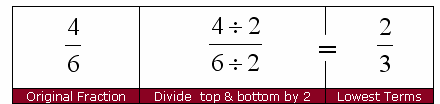
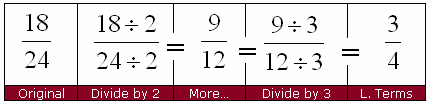
Reduce Fractions to Lowest TermsDon't get scared when directions say "reduce fractions to lowest terms!" Reducing fractions is nothing more than multiplying and dividing. If you are saying "but I am terrible at multiplying and dividing," don't worry, we can help. For starters, take a look at our math times table. Otherwise, let's reduce some fractions! Becoming a GradeA expert? There are online teaching certification programs available for people interested in a career as a math teacher.
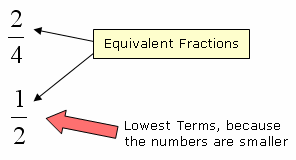
A fraction in lowest terms has the smallest numbers, but stays equivalent.
Example: 1/2 and 2/4 are both equivalent fractions, but 1/2 is in lowest terms and 2/4 is not.
So you know how to reduce fractions to lowest terms? Test your skills with some of our free fraction worksheets.
|
|||||||||||||
Stay connected
|
||

| . | ||
| Home │ Site Search │ Math Help Blog │ Help Keep GradeA Free | |
Written by Team GradeAmathhelp.com, all rights reserved. | ||